
Don’t let getting older get in the way of playing better
At Good Thinking Golf, we believe you can get better results if you skip the swing (and the dishes) for now and head straight to a better plan with a smarter strategy for 2026. Lower scores start with better thinking.
In our last session, we did a check-up from the neck up. This month, we’re going to take a look from the neck down. Golf has long been considered “the game of a lifetime.” Spend any early morning at a golf course and you’ll see a few middle-aged and senior golfers (aka baby boomers) loosening up with a little twist here and a slight turn there, convincing themselves they’re ready to go. But are they really?
REALITY CHECK (Your Ego vs your Golf Reality)
Let’s be honest – we’re not as good as we used to be or as good as we thought we were. The challenge for today’s golfer isn’t just physical. It’s mental, emotional, and lifestyle driven.
Many golfers in their 60s and 70s feel like they’ve “lost something.” I often joke with my friends and golfing clients, “You can’t say you’ve lost it… because that would mean you once had it!”
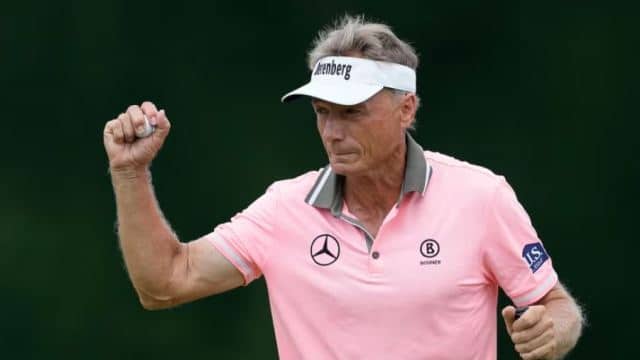
The goal isn’t to play like you used to; it’s to play the best version of you today. You Version 2.0! Even Bernhard Langer, who regularly shoots his age (68) or better on the Champions Tour, isn’t chasing the past, he’s maximizing the present. Plus, he has many hours a week to practice and work out.
LOSS OF FLEXIBILITY, MOBILITY & STABILITY
Reduced mobility limits your ability to coil and generate speed. Golf is a ground up bi-lateral body movement. If we swing harder the result is poor contact and inconsistency.
Instead, shift the focus to:
- Efficiency over effort
- Tempo over force
- Balance and clean contact (centeredness of hit)
A shorter, more controlled swing can still produce solid, repeatable results. We don’t need a bigger swing; we need a more efficient one.
LOSS OF DISTANCE (Power & Speed)
At our age we don’t need to hit it farther; we need to think better and play smarter. A natural decline in club head speed means the ball doesn’t travel as far. That’s when ego steps in, “I used to hit 7-iron from here…” Distance loss is normal, but scoring doesn’t have to suffer.
Here are some simple adjustments you can make to compensate:
- Take more club and swing easier
- Use shorter, controlled swings (1/2 swing, full finish)
- Play to smarter targets (more space, less trouble)
- Sharpen your short game and putting, increase your scoring confidence.
PSYCHOLOGICAL IMPACT (The Big One)
This is where most older golfers struggle the most and often don’t realize it. Frustration, comparison to your younger self, and loss of confidence creep in quickly. Suddenly, you’re overthinking mechanics and becoming overly critical.
“You don’t need a cart—you’re on the bogey train.”
The shift is simple but powerful:
- Move from a performance identity to your new scoring lower identity!
- Focus on: Enjoyment and Acceptance by making Smart decisions and listen to the newer version of You 2.0.
- Golf becomes much easier when you stop fighting who you are today—start enjoying the new you!
PHYSIOLOGICAL EFFECTS (Body Reality)
Recovery takes longer. I see it every day in my Coaching. So, I ask people to show up and warm up 5-10-15 minutes prior to our session. Stiffness is more common. Small aches can affect performance, and it takes longer to get the kinks out.
Warm-up is no longer optional, it’s ESSENTIAL at our age. A simple 5 to 10-minute routine before your round can make a big difference:
- Gentle mobility – swing 2 clubs slowly.
- Easy swings – build up gradually. Core and glutes are key muscle groups for golf.
- Light stretching with the legs, shoulders and upper torso.
Your round starts before the first tee. Warm up your mind and body for better results & expectations.
BUSYNESS OF LIFE (The HIDDEN Factor)
Life gets busy. Time, interest and motivation for practice often decline.
The trap is expecting better results without proper preparation.
Practice doesn’t need to be long—it needs to be smarter. Focus on:
- Putting (especially the speed of todays’ greens)
- Short game (confidence builder, short shots, chip and putt close to the hole)
Play more. Practice less—but practice better. Quality beats quantity—especially at our age. (Did I say that out LOUD?)
THE GTG PLAYBOOK SHIFT
Old model:
- Hit it far
- Swing perfectly
- Practice more
New model:
- Think better
- Play smarter
- Score better
Key focus areas:
- Target awareness: if you’re going to miss it, miss it good.
- Balance and finish connected to the target! Thanks, Panny! (Something my late friend PGA of Canada Hall of Famer Bob Panasik would often say.)
- Short game confidence over mechanical perfection! And walk to the next tee with a smile!
CLOSING THOUGHTS
There is a real opportunity to enjoy the game more, with less stress and better thinking. The best golf of your life might not be behind you. It might just look a little different than you expected. A good reason our eyes are in the front of our head is so there’s no looking back. Or thinking back for that matter.
Remember, good thinking leads to good decisions. And good decisions lead to lower scores. Play well, my friend!
Jeff Boismier, PGA of Canada Life Member
Good Thinking Golf Performance Coach
For Good Thinking Golf Fitness (all levels and all ages) please feel free to text or email me and I’ll share some great information on a 5-10-minute warm up for better golf fitness and the new You 2.0





Jeff, great article. Glad to see you doing well. Don’t forget to tell us old gueezers to keep moving up a tee deck or two. It’s hard on the ego bit a lot more fun.
John
Thanks John, great feedback!
An oversight on my part and yes to playing age-friendly tees! I can say, I’ve enjoyed golf a lot more since I started playing from the Junior Seniors tees! 🙂
Not only was Bernhard and his son allowed to compete with Tiger and his son by playing the appropriate tees, they won!
Loved the article. I want more information on that warm up you talk about. At 69 I love golf and I know I don’t hit the ball as far anymore. Being warmed up properly will allow me to keep at it with less chance of injury.
Thanks Guy, for your feedback!
Email with information to follow.
As a 68 year old “geezer” I’m probably playing my best golf. I’m not sure why I’m driving the ball longer than I ever have (I really shouldn’t with all the aches and pains I have). I know it won’t last, but I will enjoy it for as long as I can.
Maybe hitting a long ball is compensation for a poor short game.
One thing is for sure, gone are the buddy trips that are 12 rounds in 7 days.
We are dialing those back to 9.
I’ll reframe or redirect a couple of your thoughts Jeff G. Sounds like your driver is a good fit for your swing and you are using the center of the club face! Keep it up! 🙂
1. You’re still 4 under par! (68) until you turn 69! 🙂
2. Push the delete button on “I know it won’t last” Keep enjoying
3. Do you mean poor short game is causing you to enjoy tee shots?
4. Yes to dialing down # of rounds to enjoy more social time with your golfing buds and tall tales! 🙂
Great article Jeff, it just reinforces what I have been doing for the past 4 years. I am almost 79 years young and realized that I was 30 yards shorter off the tee than my younger self, so I moved up, hit more greens and made more pars. You are so right about the short game and the putting, let the young guys hit it as long as they want, we older guys can beat them on and around the greens. I have put in practice a lot of what you talk about just using common sense and taking out the ego and I am proud to say that I have been able to maintain a single digit cap for the last 3 years. You referred to better golf and I admit I play better golf now than when I was younger. Like you said and my pro says, less practice hitting the ball and more on the short game. Thanks for the article, enjoyed reading your prospective, happy golfing!
Thanks Dave and great to hear from you! Keep up with the great perspective and lower scores!
Great article, Jeff! I’m 60 and no longer carry an iron lower than a 6-iron. But the real game changer is my new 7-wood. the flight is akin to a 9-iron/PW, it stops on a dime and I can (knowingly) hit anywhere from 150 yds to 180 yds. I also moved away from blades last year. The Mizuno irons I hit have a lighter, steel fibre shaft and are easy to hit. Finally, a lighter driver shaft (50g) has made a noticeable difference in my driving length. Overall, I would suggest embracing technology when and where it makes sense can benefit the senior golfer.
Thanks Tim
Appreciate the feedback!
And some good advice for our Senior golfers! (embrace technology)
Sounds like you’ve already adjusted with a 7 wood and lighter shafts including driver = longer distance! (aka Freddy Couples with less irons) Cheers