Postcards from New Brunswick: so much more than a golf trip
Golf trips come in many shapes and sizes – from a buddies’ trip that includes 36-a-day plus plenty of red meat and beer to a more relaxed holiday that blends equal parts sightseeing, fine dining and a beach or spa with some golf. And everything in between too.
My invitation last summer to New Brunswick, as a guest of Explore NB, was intended to showcase their PGA Tour Americas tournament in Fredericton, then spend a few days along the Acadian coast sampling food, culture, history and some golf. It turned out to be way more than a golf trip.
Our merry crew included friend and colleague Grant Fraser: educator, entrepreneur, travel writer and member of the Ontario Golf Hall of Fame to name but just a few of his accomplishments, and Dale Dunlop, a retired lawyer from Halifax and publisher of The Maritime Explorer. Our host for the trip was Neil Hodge, a former sportswriter for 30+ years and now the guy charged with connecting New Brunswick with visiting travel media. Neil is a die-hard Toronto Blue Jays fan and visits Toronto a couple of times a season to see how the birds are doing. This trip was a prelude to the Jays exciting post-season run.
The itinerary for our adventure would see Grant, Dale and I play in the Pro Am for the Explore NB Open at Mactaquac Golf Club, then head north to Miramichi for some golf and sightseeing, followed by three more days along the coast which faces PEI across the Northumberland Strait. As Neil reminded us several times, that stretch of water has the warmest salt-water beaches in Canada.
Some of the towns along this coast will be familiar to people even if they haven’t visited New Brunswick: Miramichi, famous for salmon fishing; Bouctouche, home of the Irving family; and Shediac, the Lobster Capital of Canada. But the history of the area is really vested in the rich history of the Acadian people.
The Acadians were originally French colonists that settled in the coastal region of New Brunswick in the 1600s in what was known as New France. They survived by fishing, farming and trapping. By the mid 1700s, the area had come under British rule, and they decided to expel any inhabitants that didn’t swear loyalty to the British monarch. Over 10,000 Acadians refused and were deported to Europe, the Caribbean and the American colonies in the Great Upheaval. Many ended up in what is now Louisiana and are known today as Cajuns. Many also died.
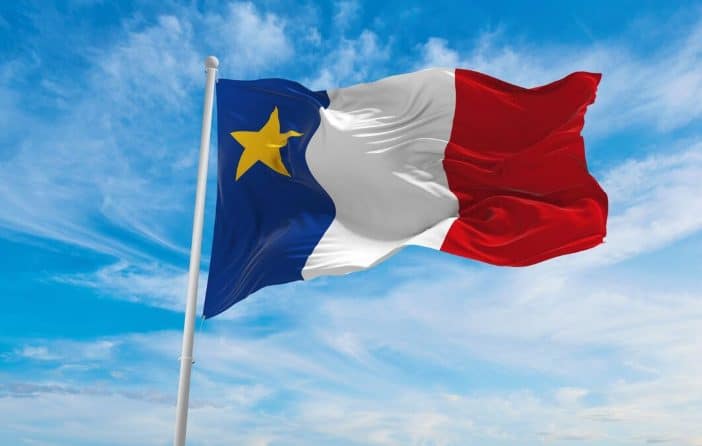
In 1764, the Brits allowed the Acadians to come back, and some did, settling along the coastal areas of New Brunswick, Nova Scotia and PEI, and fishing and farming as before. They developed their own culture, which is a mix of French, Quebecois and native and they are fiercely independent. In 1884, the Acadians even adopted their own flag, which is the same bleu, blanc et rouge as the French flag but with a gold star in the upper left corner. That Acadian flag is displayed proudly in most towns along the coast.
Some of this I vaguely recalled from high school history but much of it was new and quite fascinating. Many people think of Canada in terms or French, English or First Nations but that doesn’t do justice to many other nations and ethic groups that helped build this country and still maintain a connection with their ancestral culture. We have a rich heritage in Canada and I’m glad I got to see another part of it on this trip.
Following are some images and captions highlighting our stops. (Photos courtesy of Explore NB except where noted.)
Explore NB Open

This is a huge event for New Brunswick and the organizing group along with PGA Tour Americas really stepped up to turn it into something special. The 2025 version received the Best Tournament Brand Identity Award from the PGA Tour, which is a nice tribute, and everything from the sponsor support to the Pro Am was amazing. Our group played the front nine with Chris Francour from Boston and the back nine with Charlie Nikitas from Chicago, both of whom mentioned that it was one of their favourite tournaments on Tour.
Mactaquac Golf Club, Fredericton
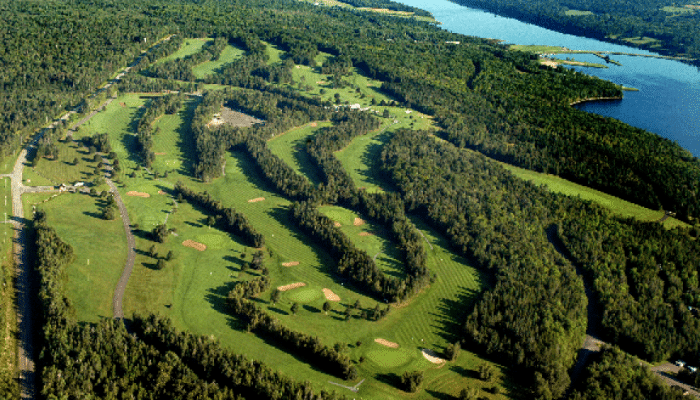
Any time you get to play a course hosting a PGA Tour event, you can be sure the conditions will be as close to perfect as possible. Mactaquac was pristine and the large sloping greens were the best (and fastest) I putted on all year. The course, designed by William Mitchell and Ian Andrew, features generous fairways bordered by deep rough. There’s no dramatic elevation changes, rather a gently rolling landscape that moves in and out of the forest. Huge bunkers frame each green. Our pros both handled the course easily. My notes indicate I need to work on my long putts and long bunker shots.
Miramichi Golf Club
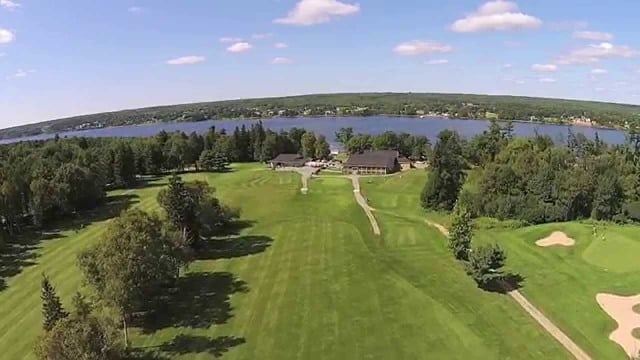
To say this pretty course overlooking the Miramichi River has a lot of history is an understatement. When we played in the summer of 2025, the club was celebrating its 100th anniversary and the clubhouse was celebrating 200 years. The clubhouse was originally a private home and its claim to fame is that it was one of only a few buildings in town that survived the Great Miramichi Fire of 1825 which burned approximately 1/5 of New Brunswick. The golf course is fun and easy to walk, with fairways lined with beautiful white pines. Club pro Morgan Matchett, who teaches at the course and was a standout junior player in New Brunswick, was a delightful host and kind enough not to beat us too badly.
Max Aitken Boat Tours
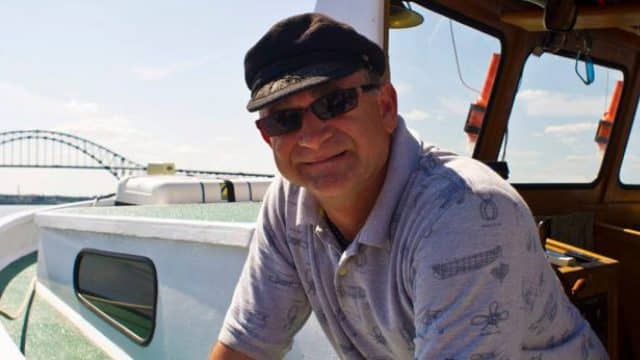
On a hot summer afternoon, it’s a toss-up for me whether to play golf or go boating. To do both in one day is a bonus. So, after our wonderful round at Miramichi, we headed to Ritchie’s Wharf, grabbed a quick lunch at Vera’s Kitchen (delicious pulled pork sliders) and waited to board the Max Aitken. The cruise boat is captained by Azade Haché (pictured above), a bona fide Acadian and a colourful character with a great sense of humour. As we cruised along the Miramichi, he shared plenty of local Acadian history about the town and the river. Golf + boating = a great day!
Kelly’s Beach, Kouchibouguac National Park
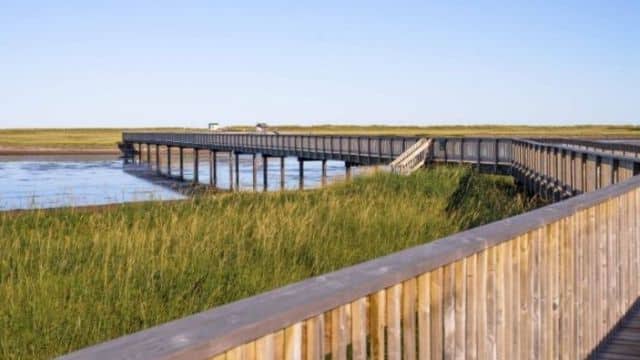
No trip to New Brunswick is complete without a stop at Kelly’s Beach in Kouchibouguac National Park. Known for having some of the warmest saltwater beaches in Canada, this stretch of coastline is a paradise of soft sand, gentle waves, and a long boardwalk that carries you over protected dunes.
St. Ignace Golf Club
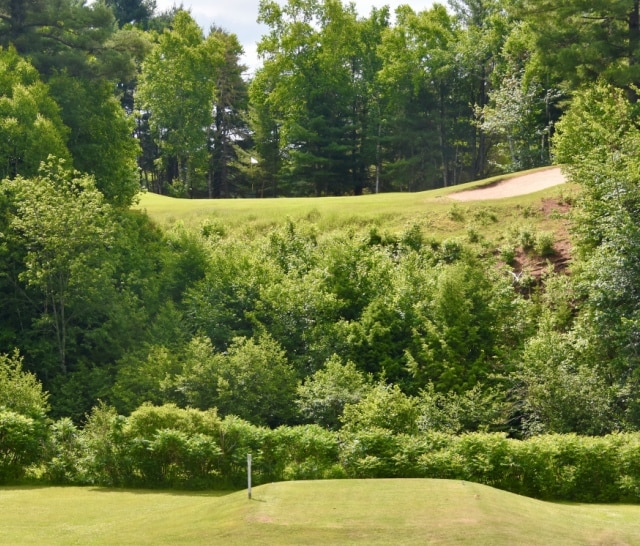
Designed by esteemed Canadian architect Geoffrey Cornish, St. Ignace is a course that I’d love to play again. A little local knowledge is a must, and we were fortunate to have a long-time member with us. Even still, there are plenty of blind uphill shots and lots of elevation changes as the course crosses a river valley. Most of the fairways are quite generous and while some of the greens are wickedly canted one way or the other, overall, it’s a very playable course. I’m not sure I would call the par-3 11th the Signature Hole, but it certainly was the most memorable. This quirky hole measures 190 yards from the back tee and 100 from the front and goes straight uphill 50-60 feet above the tee deck with forest on both sides. It’s an all or nothing shot. Grant made it from the tips. The rest of us reloaded on the front deck. (Photo courtesy of Dale Dunlop / The Maritime Explorer)
Phoca Tours, Saint-Louis de Kent
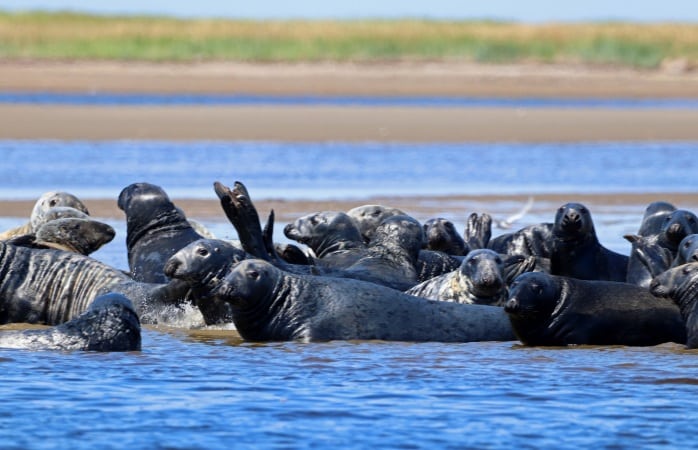
Our accommodations at L’Ancrage Bed & Breakfast overlooking the Kouchibouguacis River included a hearty breakfast prepared by our Dutch hosts Liane and Kores. Imagine my surprise when Kores, who had made my omelette that morning, showed up as the captain on our sightseeing trip aboard a 30-foot pontoon boat. The 2 ½ hour cruise took us down river and out to the offshore dunes where massive colonies of Grey Seals relaxed along the sandbars and thousands of Terns swooped above and dove into the ocean.
Bouctouche Golf Club
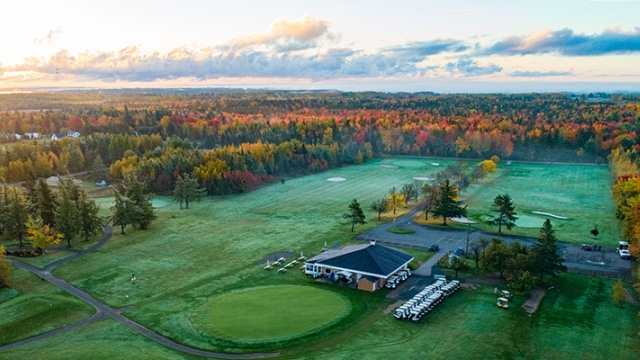
A Graham Cooke design, Bouctouche is relatively flat with two distinct nines. The front is fairly tight and puts a premium on accuracy while the back is more open and exposed to heavy winds off the ocean. The course isn’t long at just over 6,200 yards and I played really well on the front, but the back was more of a struggle with a steady wind blowing.
Le Pays de la Sagouine, Bouctouche
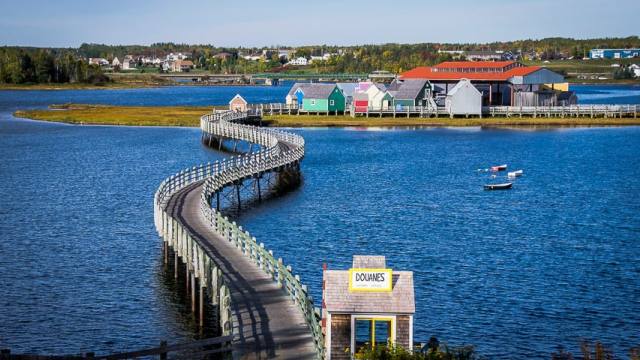
This cultural village sits on a small island connected by long wooden boardwalks, and features colourful buildings, live performances, music, and storytelling that recreate traditional Acadian life. It was created in 1992 to bring to life the Acadian world imagined by author Antonine Maillet and inspired by La Sagouine, her celebrated play about a humble charwoman whose voice became a symbol of Acadian identity. Also part of Le Pays de la Sagouine is Akadi Lumina, a 1.5 km nighttime trek through the forest that features a number of stops where you can see musical performances, majestic scenery and historical scenes all done with projected lights and video.
Shediac – the Lobster Capital of Canada
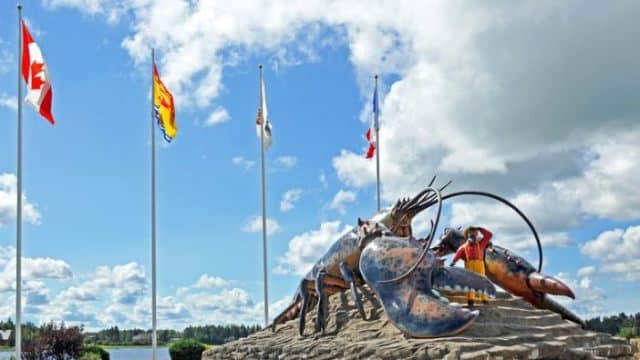
I’ve singled out Shediac because they claim to be the Lobster Capital of Canada, but the entire Acadian Coast is filled with lobster boats and fishermen. Virtually every restaurant has seafood on the menu. We had seafood chowder or lobster bisque with almost every dinner; we even had lobster on pizza.
For more information about New Brunswick, click HERE.