The Round Table: new life for LIV, the rollback, and former Tour stops
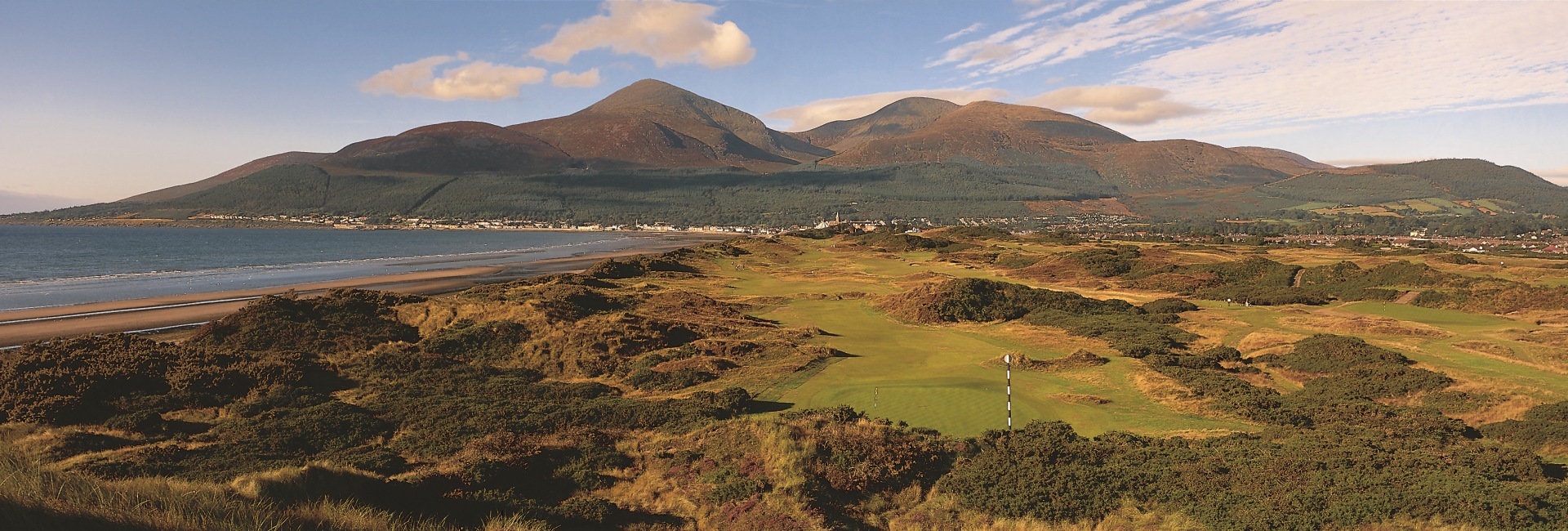
Pictured above: Turnberry Golf Club, Scotland, 9th hole
Each week, we ask our panel of writers, PGA members and golf industry experts to weigh in with their views on the hot topics of the day.
At many PGA Tour events, players are routinely scoring in the low 60’s and threatening to shoot sub-60 rounds. It’s not all attributable to how far the golf ball goes but distance is a huge factor. During the recent PGA Championship, Cameron Young used a ball that conformed to the specs for a “rolled-back” ball that will become the official standard in 2028 and pounded it similar distances as before. The whole idea of a roll-back continues to be a hot debate with stakeholders on both sides digging in. In your opinion, does the proposed roll-back go far enough, is it ok as is or should they just scrap the idea altogether?
Jim Deeks, Fairways Magazine (@jimdeeks): Your question made me wonder, is there another way we could deal with this whole “they’re making a mockery of modern golf courses” problem? Clearly, longer golf courses aren’t the answer, nor longer rough or tighter fairways. No one really wants to see a rolled-back ball, especially if it makes no difference to big hitters. So, here’s a thought… why not just change par for pros? Make par 5s obsolete and change them to par 4s, change shorter par 4s to par 3s, and, dare I say it, change par 3s to par 2s. Overnight, you’d have par 72 courses changed to, perhaps, par 64s. I think we’d all get used to the change.
TJ Rule, Golf Away Tours (@GolfAwayTJ): If they are finding balls that “conform” but don’t have much of an impact on distance, then what’s the point? If they are going to roll it back, they need to make it significant, like 10-15%, and I’m not sure that’s what the sport needs. It would bring back some of the classic courses, but maybe that’s not the most important issue with the pro game. Fans love to see guys bomb the ball 350 yards, and most of the older courses can still protect themselves with long rough and firm, fast conditions. If science is always going to counteract any new regulations, then maybe it’s just not worth the hassle.
Hal Quinn, Freelance Writer, Vancouver: These guys could shoot in the 60s playing gutta perchas if there’s no rough. Young says he prefers the flight of the so-called ‘rolled back’ ball and has no concerns about distance with it, so it won’t make much of a difference for his Tourmates either. While taking some fun out of the game for weekenders, the rolled back ball ain’t the stand-alone answer at the elite level. Time to revisit that whole co-efficient of restitution issue with club faces.
Peter Mumford, Fairways Magazine: The rollback proposal never went far enough, and it turns out that the initial 10-15% reduction has effectively been whittled back to single digits. I don’t want to see tournament scores at 20-under every week or some of the legacy courses eliminated because they aren’t long enough. If they can’t enforce a minimum 20% rollback, I’m beginning to consider bifurcation, something I never thought I’d do.
LIV Golf struggles on with CEO Scott O’Neil looking to replace the Saudi funding that will end after this season. O’Neil’s latest pitch is for a 10-event league that will try to emulate the best LIV venues such as Adelaide, Singapore and South Africa and build on their unique team concept. Without the stigma of Saudi backing, is a LIV Golf league more palatable and is there a place for it in men’s professional golf?
Deeks: Not in my world.
Rule: Who the heck is going to invest in a business that has lost billions of dollars every year it has been in existence. There aren’t many people that have that kind of money to throw away to have their own sandbox. There isn’t a team format that has generated any interest from fans to this point, so anything they come up with won’t move the needle enough for the league to be financially viable. Just put a bow on it and let the players find another Tour to play. It’s done.
Quinn: The global reaction to this sports washing fandango has been universally underwhelming from day one. It will be of even less interest if its 10-event season (no interest whatsoever in the prime US of A market) can be financed without the Saudi lifeline. There was no place for it before the Norman invasion, and golf needs it even less now.
Mumford: As a disruptor, LIV Golf did a number on the PGA Tour but the upstarts that go up against established leagues – think WFL in football or WHA in hockey – just don’t last. They’re outsiders and always will be. As LIV Golf loses its name players, interest in the League in any new iteration declines too. O’Neil can try to sell a 10-event schedule but one has to wonder what the attraction is. Are fans in international markets missing team golf, shotgun starts and loud music or are they just missing good golf and accepted LIV’s version because they didn’t have anything else? If it’s the latter, which I believe to be true, then there’s a great opportunity for the DP World Tour to add a few key events in the Fall that could be open to top PGA Tour players too – but LIV Golf’s time is up.
The PGA Tour continues to evolve and may look much different in a year or two. Over the years, many courses have been tournament venues, but not all have lasted. Which course that used to be a regular Tour stop do you miss the most?
Deeks: I realize it wasn’t “a regular Tour stop”, and as much as I hate everything associated with Donald Trump, I’m sorry that Turnberry is off the Open Championship rota. Otherwise, I can’t really think of any venues that I miss… although I will miss the tour events in Hawaii next year, Kapalua in particular. Another question you might ask would be the opposite: which courses would you LIKE to see holding a regular Tour event (even if some would never consider it)?
Rule: This is a good question and there isn’t one course that comes top of mind, other than maybe Kapalua, now that it’s off the schedule. Other courses that used to host the Greater Milwaukee Open and similar events don’t stand out as courses I miss to be honest.
Quinn: One sure stands out — Glen Abbey. Just kidding. The only guy who liked that awful design was Jack. On the miss list though is the Firestone CC in Akron. Seems like it was on TV a lot with the World Series of Golf, three PGA Championships, and a WGC event until 2018. It was long and tough and after watching a generation of pros play it, it was comforting to sit back and enjoy a Sunday afternoon at Firestone.
Mumford: Turnberry Golf Club in Scotland has long been one of my favourite courses, so it was a huge disappointment to see it dropped from the Open Championship rota, but another that comes to mind is Castle Pines in Colorado where for 21 years the PGA Tour held its only Stableford scoring event. Gorgeous mountain scenery and a unique format made for a pleasant change in the schedule and the odd albatross added an exclamation point on the scoreboard.