10 Tom McBroom courses you can play
Tom McBroom is one of Canada’s best known and accomplished golf course architects. His projects dot the Canadian landscape from coast to coast and range as far afield as Finland and St. Kitts, but the majority of his work has been right here in Ontario.
Tom’s design style is to let the land dictate the character of each course. They tend to be quite dramatic and always fun to play. While many of his best known Ontario designs are private (RattleSnake Point, Granite Golf Club, Oviinbyrd, Port Carling, National Pines and Beacon Hall), there are still a number that are open to the public.
Following are 10 you can play. Two others (Firerock in London and Oakridge Golf Club in Port Perry) are also public but I haven’t played them yet.
Ambassador Golf Club
Windsor, Ontario
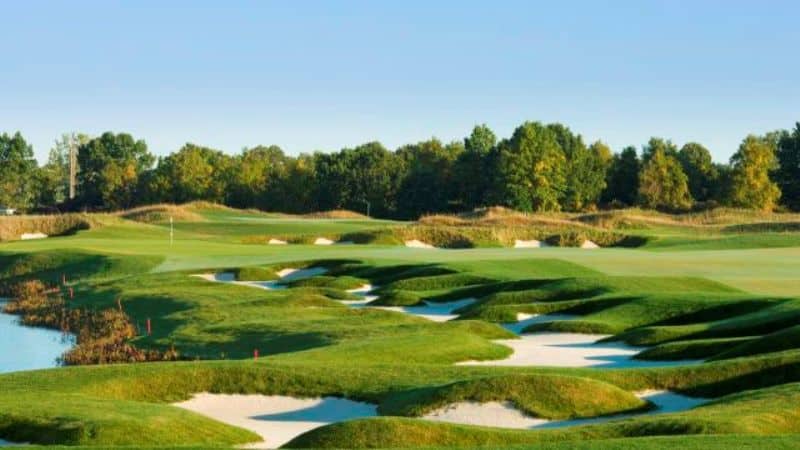
Ambassador began life as a sand-and-gravel quarry, relatively flat and featureless, so McBroom’s task was essentially to create a landscape capable of supporting a strategic golf course. The solution was bold earth shaping, aggressive bunkering, fescue-covered mounding and the imaginative use of existing ponds. The large mounds provide much of the visual definition, while the fairways are often canted toward or away from those slopes.
Water is another important part of the transformation. Several ponds from the former quarry operation were enlarged and incorporated into the routing, creating strategic decisions rather than simply decorative water features.
Ambassador is therefore less about preserving an existing natural landscape than demonstrating how dramatically a golf architect can reshape a difficult piece of property. What began as an industrial site has been given an entirely new identity through topography, vegetation, water and strategic hazards.
Deerhurst Highlands
Huntsville, Ontario
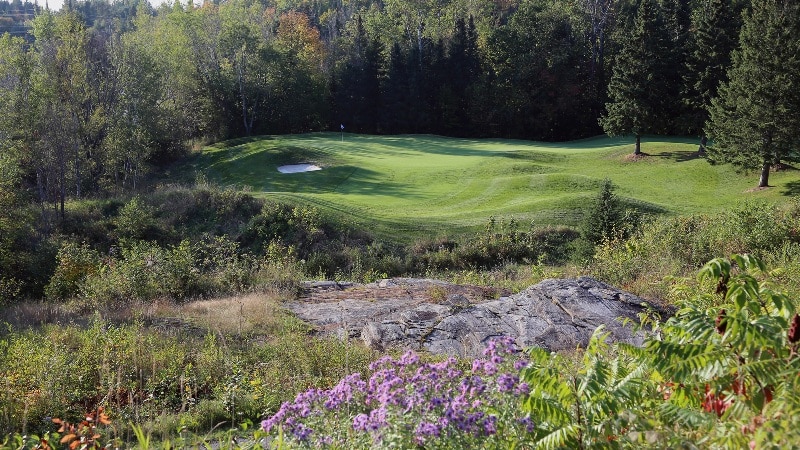
One of two collaborations Tom did with Bob Cupp, Deerhurst Highlands established a template for dramatic Muskoka golf by embracing the rugged Canadian Shield rather than trying to tame it. The course rises and falls through dense forest, wetlands and granite terrain, with elevation changes continually altering the perspective from one shot to the next.
The first elevated tee (pictured above) immediately establishes the character of the course, providing a broad view over the surrounding landscape. From there, the routing moves through wooded terrain and across changing elevations, with granite outcroppings becoming increasingly important to the visual identity of the holes and the scenery.
The design is particularly effective because it’s all natural. The rock formations establish the direction of holes, the forests frame landing areas and the elevation changes determine how golfers see and approach their targets.
Hockley Valley Resort
Mono, Ontario
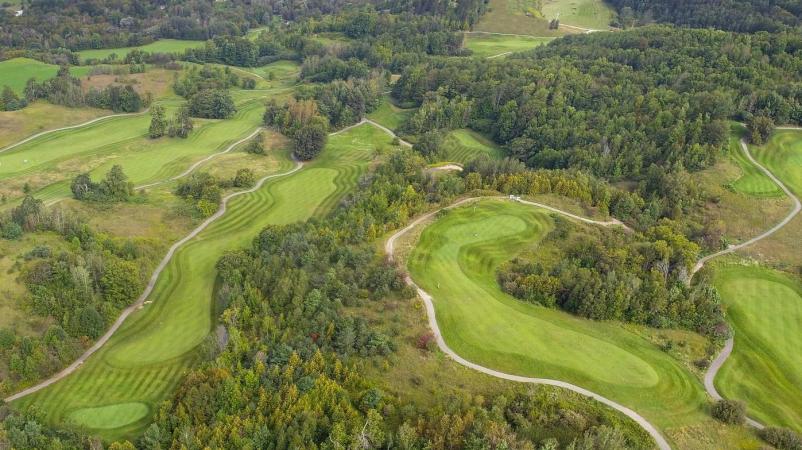
Hockley Valley is perhaps the purest example in this group of allowing topography to dictate the golf course. The property is exceptionally hilly, with the layout climbing, descending and traversing the slopes of the Hockley Valley. Only the opening and closing holes occupy relatively level ground; much of the rest of the course is built around dramatic elevation changes.
Those slopes create a remarkable variety of lies and approaches. A golfer can rarely assume that the ground beneath the ball will be level, making position off the tee particularly important. The elevation also creates changing perspectives, with some holes looking across the valley while others disappear into wooded corridors.
One of the course’s most distinctive characteristics is its complete lack of traditional sand bunkers. Instead, grassy hollows, swales, fescue-covered knolls and natural-looking depressions defend fairways and greens. The relatively small greens reinforce the importance of approach accuracy. Many sit within natural amphitheatres or are surrounded by slopes that can make recovery shots difficult.
Legends on the Niagara (Ussher’s Creek Course)
Niagara Falls, Ontario
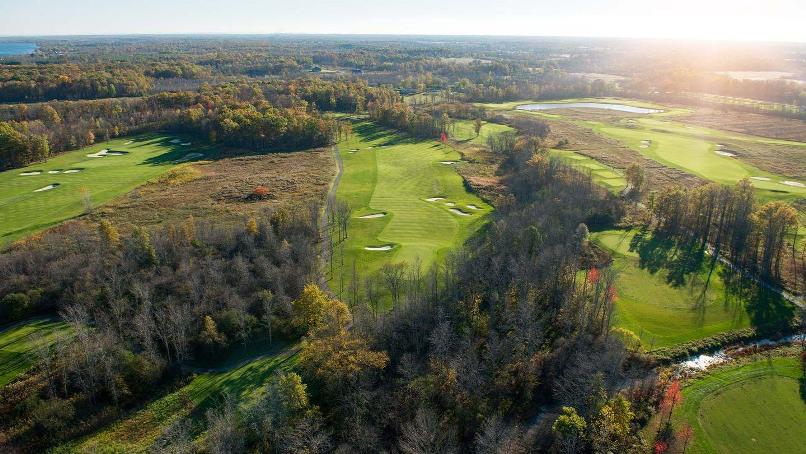
Ussher’s Creek is built around a very different landscape from the rugged Muskoka courses. Here the setting is relatively flat, with woodland, wetland and open meadowland providing the principal natural elements. The course moves through these environments in a parkland-style routing, using trees, wetlands and fescue to create definition and strategic separation between holes.
The absence of dramatic elevation does not make the landscape uninteresting. Instead, the design relies on changes in vegetation and the transition between open and wooded areas. Thick stands of deciduous trees frame many fairways, while wetlands introduce natural hazards that can influence both the line of play and club selection.
The fescue is particularly important to the visual character. Knee-high rough creates strong contrast with the manicured playing surfaces and gives many holes a distinctly natural appearance. The effect is less about dramatic forced carries and more about defining corridors and encouraging golfers to think carefully about where they position the ball.
Lora Bay Golf Club
Thornbury, Ontario
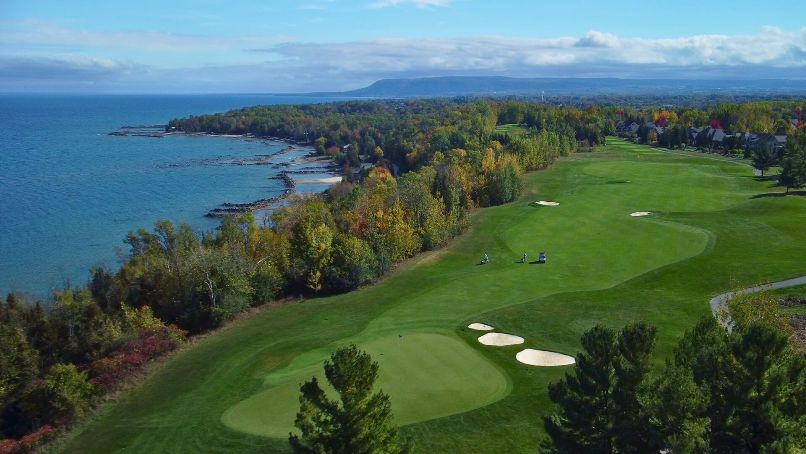
Lora Bay is another collaborative effort, this time between two Toms – Tom McBroom and World Golf Hall of Famer Tom Lehman.
Set between Georgian Bay and the Niagara Escarpment, Lora Bay follows the natural contours of the Nipissing Ridge, with elevation changes providing both drama and strategic interest. The course moves through birch and poplar forest, former apple orchards and open areas where the views stretch toward Georgian Bay.
One of Lora Bay’s defining characteristics is the contrast between its broad landscape and its more intimate holes. The forested sections create corridors and visual definition, while the more open holes expose golfers to the wind and spectacular views. The natural elevation also allows several holes to play with considerably more visual and strategic movement than the yardage might suggest.
Manitou Ridge
McKellar, Ontario
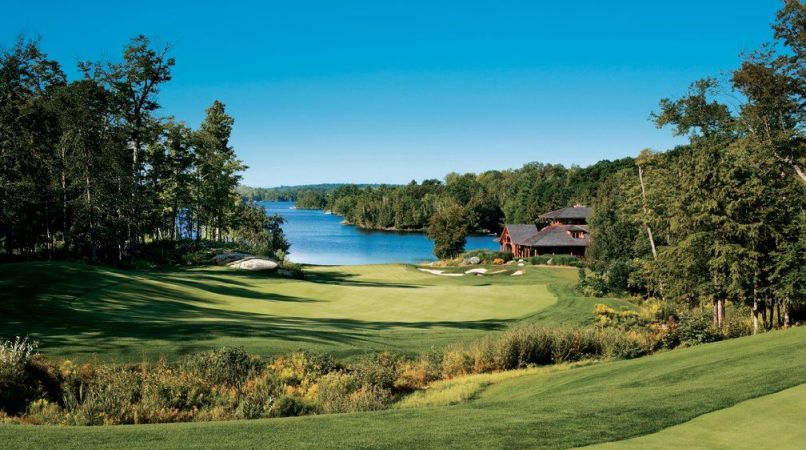
Manitou Ridge is a course where the landscape does much of the architectural heavy lifting. Set beside Lake Manitouwabing in central Ontario’s rugged cottage country, it moves through dense forest, exposed rock, wetlands and substantial changes in elevation. Rather than flattening the site into conventional fairway corridors, the routing follows the natural rhythms of the property.
The opening holes provide an attractive introduction, beginning near the lake before gradually moving into the more secluded interior of the property. As the round progresses, the elevation changes become increasingly important. Fairways rise and fall naturally, while rocky outcroppings and dense woodland provide definition without making the course feel artificially enclosed. The spectacular finishing par 5 (pictured above) is one of the most iconic signature holes in Canadian golf.
Parry Sound Golf & Country Club
Parry, Sound, Ontario
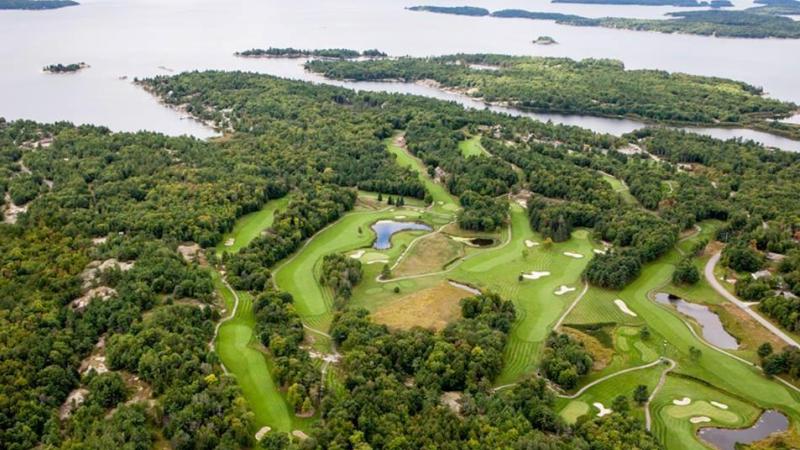
Parry Sound is one of Tom’s earliest designs and one of his first uses of the Canadian Shield – a style that would become increasingly recognizable in his later Muskoka designs. The course moves through a mixture of granite outcroppings, forest, wetlands, ponds and remnants of the property’s agricultural past. The result is a compact-looking course that can play considerably more demanding than its yardage suggests.
Rock is central to the experience. Outcroppings and rock walls appear beside fairways and greens, sometimes defining the direction of a hole and sometimes simply creating a dramatic visual frame. The routing also moves between contrasting landscapes. Dense wooded corridors demand accuracy, while more open sections occupy land that was once farmland. Ponds, wetlands and waste areas add another dimension to the course’s strategic variety.
Perhaps the most interesting aspect is how little the course relies on sheer length. At roughly 6,000 yards, it is a reminder that demanding golf can come from positioning, slopes, rock and restricted corridors rather than distance.
Rocky Crest Golf Club
MacTier, Ontario
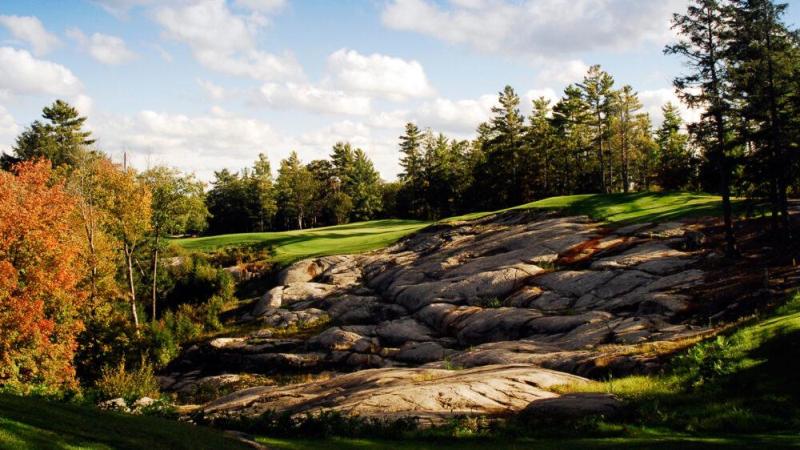
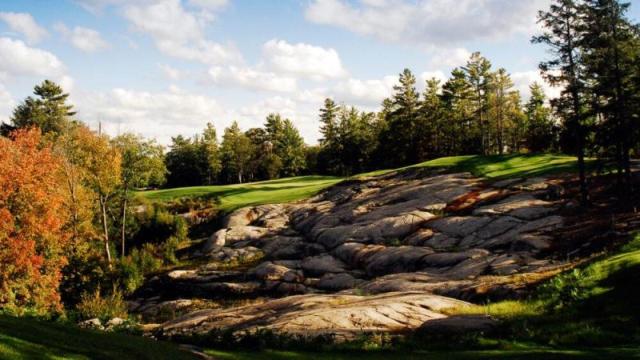
Rocky Crest may be one of the clearest expressions of Canadian Shield golf. The property is dominated by Muskoka’s characteristic forests of pine, white birch and hemlock, interspersed with exposed granite, wetlands and rolling terrain. Rather than clearing the rock away to create conventional golf corridors, the design makes it one of the defining strategic and visual elements.
The granite outcroppings provide natural definition to fairways and greens and occasionally become direct strategic hazards. The sixth hole (pictured above) is the most dramatic example, with an elevated tee requiring a substantial carry over a granite canyon.
Timberwolf Golf Club
Sudbury, Ontario
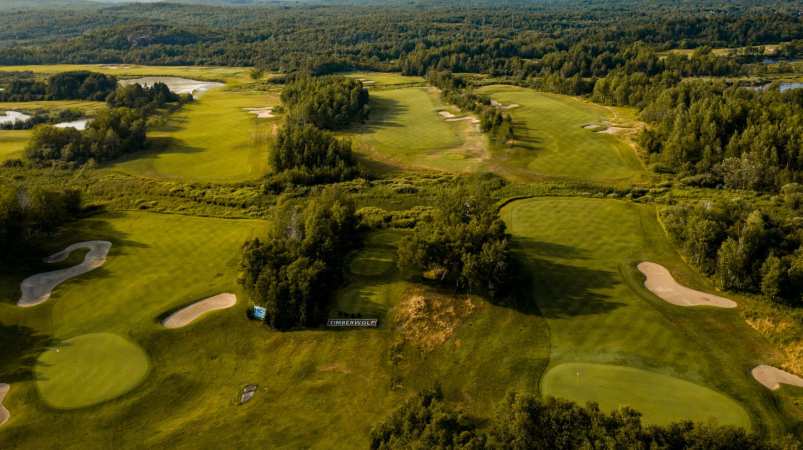
Timberwolf occupies an enormous piece of Northern Ontario landscape, and its scale is one of the first things a golfer notices. The course covers an unusually large area, allowing individual holes to feel separated from one another. The result is a strong sense of solitude, with long stretches where the golfer appears to be playing through wilderness rather than around neighbouring holes.
The natural landscape is varied. Streams and wetlands weave through the property, while exposed rock outcrops, white birch and other native vegetation provide a distinctly Northern Ontario character.
Whitewater Golf Club
Thunder Bay, Ontario
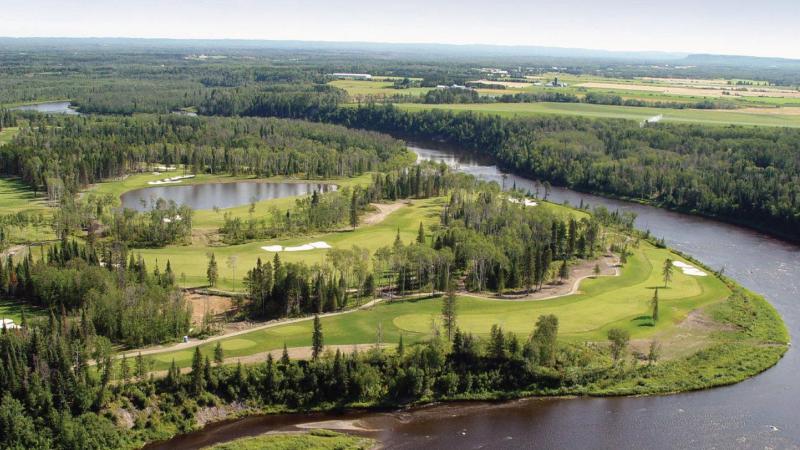
Whitewater is built around one of Northern Ontario’s most dramatic golf landscapes: the rugged valley of the Kaministiquia River west of Thunder Bay. The course moves through and around plateaus, ravines, wetlands and steep terrain, producing a round that feels considerably wilder than a conventional parkland course.
The river is the defining natural feature. Rather than simply running alongside the course, it repeatedly influences the routing and creates some of the property’s most memorable shots.
Away from the river, the landscape continues to provide variety. Ravines and wetlands create natural separation between holes, while plateaus provide elevated playing surfaces and changing sightlines. The result is a course that feels integrated with the Northern Ontario landscape rather than superimposed upon it.
Wildlife is also part of the experience, with moose, bear, deer and lynx among the species reported on the property.
Whitewater’s appeal ultimately comes from scale and wildness. The river valley, forests, wetlands and rugged terrain give the course a distinctive northern identity and provide the raw material for some genuinely memorable holes.
For more information on any of these courses, click on the name of the course or the image.