Whirlpool Golf Course – a classic Stanley Thompson design
Course at a Glance
Location: Niagara Falls, Ontario
Designed by: Stanley Thompson
Opened: 1951
Type: Public Golf Course
Holes: 18
Par: 72
Yardage: Gold: 7,019 / Blue: 6,701 / White: 6,292 / Red: 5,702 / Yellow: 5,203
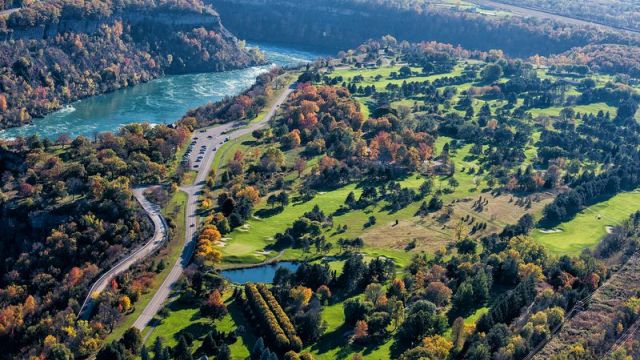
The Course: Classic parkland layout on gently rolling terrain adjacent to the Niagara River. Whirlpool was the final design Thompson completed before his death.
Rates: $85 walking
Date played: October 2026
Overview
There are golf courses that distinguish themselves through their location, others through their architecture, and a select few through the legacy of the people who created them. Whirlpool Golf Course in Niagara Falls has all three.
Set against the dramatic backdrop of the Niagara River Gorge, this historic public facility is particularly significant because it represents the final course completed by Canada’s most celebrated golf course architect, Stanley Thompson.
Opened in 1951, Whirlpool has welcomed generations of golfers to a remarkable piece of Niagara landscape. More than seven decades later, it remains an important part of Ontario’s golf heritage, while a renewed commitment to restoring its original architectural character is helping ensure that Thompson’s vision continues to shape the golfing experience.
A significant chapter in Canadian golf history
The story of Whirlpool begins in 1947, when Stanley Thompson undertook the design of a new golf course for the Niagara Parks Commission. By this stage of his career, Thompson had already established himself as Canada’s pre-eminent golf architect, with an impressive portfolio that included such celebrated designs as Banff Springs, Jasper Park Lodge, St. George’s and Highlands Links.
Thompson was particularly adept at finding golf courses in landscapes that offered something distinctive. His designs were rarely simply laid over the land. Instead, he used existing terrain, natural elevation changes, vegetation and other features to create courses that appeared to belong to their surroundings.
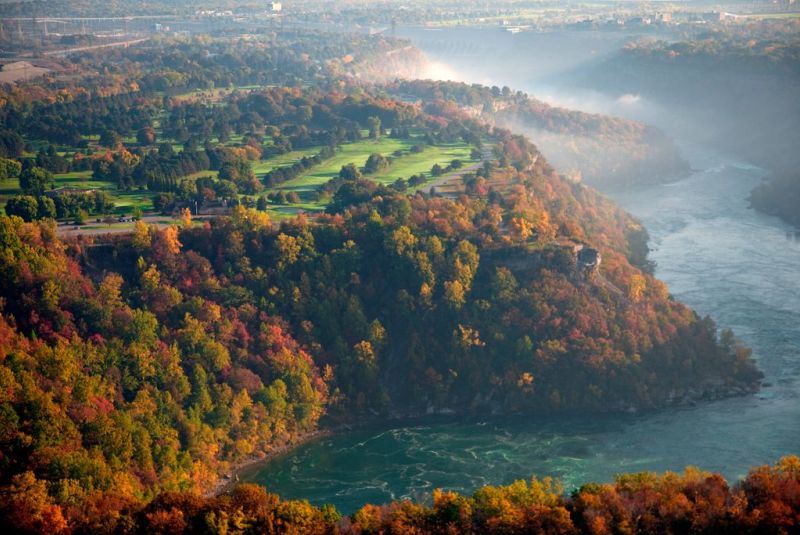
The course officially opened on July 2, 1951, with an international exhibition featuring four prominent professionals. Canadians Stan Leonard and Bob Gray faced Americans Cary Middlecoff and Jimmy Demaret in an event that attracted approximately 10,000 spectators.
Thompson died in January 1953, making Whirlpool his final completed course. That distinction alone gives the property a special place in Canadian golf history.
Today, Whirlpool is owned and operated by the Niagara Parks Commission and remains one of the relatively few opportunities for golfers to experience an original Thompson design without the need for a private club membership.
Changes through the years
Like many historic golf courses, Whirlpool has undergone changes since its original opening. Some were intended to accommodate the expectations of modern golfers, while others reflected the practical demands of maintaining an increasingly mature property.
A significant redesign and renovation was undertaken in the 1990s, with David Moote and Dick Kirkpatrick associated with the work. Over time, additional changes to bunkering, vegetation and playing corridors altered some of the characteristics of Thompson’s original design.
That has prompted a renewed interest in restoring the course’s architectural identity.
Rather than undertaking a wholesale redesign, Niagara Parks has embarked on a phased restoration program intended to bring Whirlpool closer to Thompson’s original intentions. The project involves consultation with Ian Andrew, an architect and restoration specialist whose work has focused extensively on preserving and restoring historic Stanley Thompson courses.
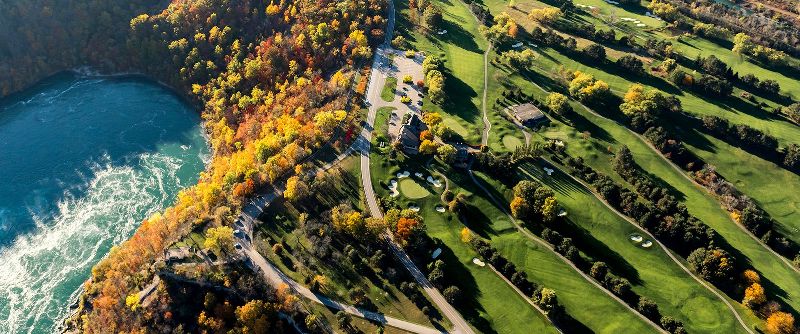
The objective is to recover some of the strategic characteristics that made the original layout distinctive, improve playability and ensure the course remains sustainable over the long term.
Importantly, the restoration is being undertaken in phases so that the course can remain open during construction. It is an approach that recognizes the importance of protecting both the golfing experience and the historic character of the property.
For golfers who appreciate classic architecture, the project is particularly encouraging. Rather than attempting to modernize Whirlpool by imposing a contemporary design philosophy, the intention is to rediscover what made the course special in the first place.
Favourite holes & highlights
One of Thompson’s strengths was that no two holes were alike. Even on properties where the holes seemed to go back and forth, he always found a way to give each hole its own character.
He didn’t rely on tricks – most of the course is right there in front of you – but at Whirlpool, there are a number of raised greens where the pin location is partially hidden. The 10th is a good example – a tough uphill par where the green is positioned below the crest of the hill. Number 11 plays to an elevated green, as do 9 and 18.
Usually, Thompson’s greens slope front to back and don’t have plateaus, humps or awkward contours. They’re often flanked by bunkers but accessible in front, giving higher handicaps a chance on approach.
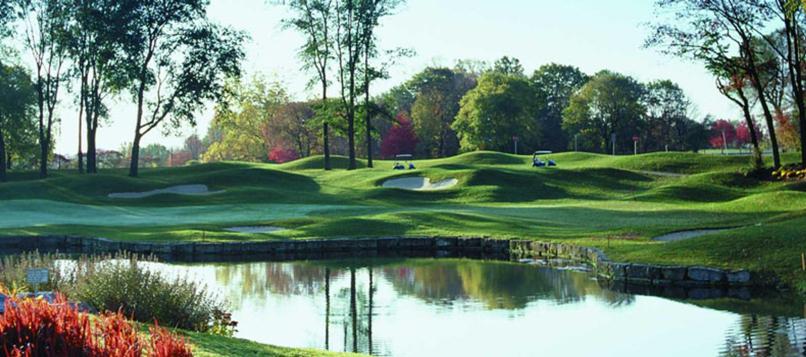
Strong par 3s are another trademark Thompson design. There are five at Whirlpool, none better or prettier than the 14th in my opinion, a long shot across a pond.
Architects are often reluctant to single out a signature hole, sometimes proclaiming that there are 18 of them. If Thompson said that today, he wouldn’t get an argument from me.

Final thoughts
Seventy-five years after its opening, Whirlpool occupies an interesting position in Ontario golf. It is a public course with a significant architectural pedigree, a historic connection to one of Canada’s greatest golf designers and a setting that is difficult to replicate.
Perhaps its greatest attraction, however, is that it continues to offer something that is becoming increasingly difficult to find: an opportunity to experience a genuine Stanley Thompson design without the exclusivity of a private club.
The ongoing restoration program suggests that Niagara Parks understands the importance of that legacy. By carefully recovering the original design features while investing in modern facilities and environmental sustainability, Whirlpool is positioning itself for another generation of golfers.
Thompson’s final contribution to Canadian golf deserves to be experienced, appreciated and protected.