Idyllic escape at Lake St. George Golf Club in Washago
Course at a Glance
Location: Washago, Ontario (between Orillia and Gravenhurst)
The Course: 27 holes with 3 distinct nines. The North is generally reserved for 9-hole rounds while the West and South combine for 18 hole rounds. Par on each nine is 36.
Yardages:
North Course (9 holes): Blue – 3024, White – 2907, Yellow -2422, Red – 1905
West-South Course (18 holes): Blue – 6164, White – 5681 Yellow – 5125, Red – 3785
Architects:
North – Ed Leeder (1952); South – Robbie Robinson (1972); West – Bob Moote (2002)
Green Fees:
9 Holes (M-T) Walking – $32; 9 Holes (F, S, S & Holidays) Walking – $34
18 Holes (M-T) Walking – $54; 18 Holes (F, S, S & Holidays) Walking – $6
Date Played: June 2026
My Review
Hidden among the towering pines between Orillia and Gravenhurst, Lake St. George Golf Club has quietly become one of Ontario’s most enjoyable public golf destinations. While many golfers know it for its value and 27-hole layout, the course’s real appeal lies in its fascinating history, thoughtful architecture and the way each nine offers a completely different golfing experience.
The story begins with a dream
In 1950, Ed Leeder began carving a golf course out of rugged terrain near the shores of Lake St. George. The project was far from easy. Dense forest, waist-high grass and enormous granite boulders made construction a monumental undertaking. According to the club’s history, Leeder was so committed to building the course that he sold both his Toronto home and his car to finance the project. When asked why, he famously replied, “Owning a golf course is all I’ve ever desired.” That determination paid off when the original nine holes opened in the fall of 1952.
For its first two decades, Lake St. George operated as a charming nine-hole course before a pivotal moment arrived in the late 1960s. Canadian golf architect Robbie Robinson, one of the country’s most respected designers and a protégé of the legendary Stanley Thompson, was brought in to renovate the original holes and design an entirely new South Course. Robinson’s work transformed the property, creating an 18-hole facility that opened in 1972. Thirty years later, architect Bob Moote added the West Course, giving Lake St. George the 27-hole configuration golfers enjoy today.
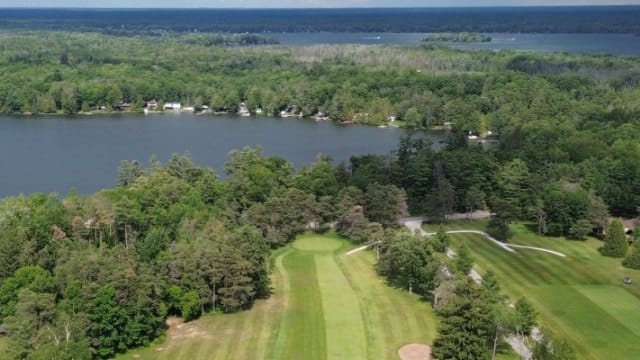
Another important chapter in Lake St. George’s history began when the Louth family purchased the property in 1979. Since then, the family has overseen the course’s continued evolution while remaining committed to its original character. Under their stewardship, Lake St. George expanded from 18 to 27 holes with the addition of the West Course in 2002, upgraded its practice and clubhouse facilities, and strengthened its reputation as one of the regions premier public golf destinations. Despite these improvements, the Louth family has resisted the temptation to commercialize the experience, instead preserving the welcoming atmosphere and exceptional value that have made the course a favourite among local golfers, cottage owners, and visitors for more than three decades.
One of the club’s greatest strengths is the distinct personality of each nine
The original North Course remains rooted in classic parkland golf. The routing follows the natural contours of the land as fairways twist gently through mature hardwoods and pines, while modest yardages place a premium on positioning rather than power. It rewards thoughtful golf and reminds players that good architecture doesn’t always require championship length.
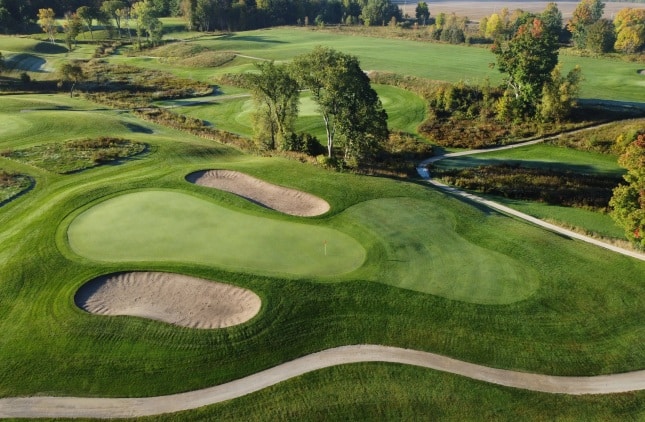
Robinson’s South Course is more strategic. His influence can be seen in the flowing green complexes, well-placed bunkering and subtle use of elevation. Robinson believed the ground should dictate the golf and nowhere is that philosophy clearer than at Lake St. George. Rather than forcing dramatic features onto the property, he allowed the existing landscape to determine the routing, creating holes that feel both natural and memorable.
The newest West Course introduces a different rhythm. Designed by Bob Moote and opened in 2002, it plays through heavily wooded terrain with tighter driving corridors and several risk-reward opportunities. It complements the South Course beautifully, giving golfers a modern challenge while preserving the property’s natural beauty.
My Favourite Holes
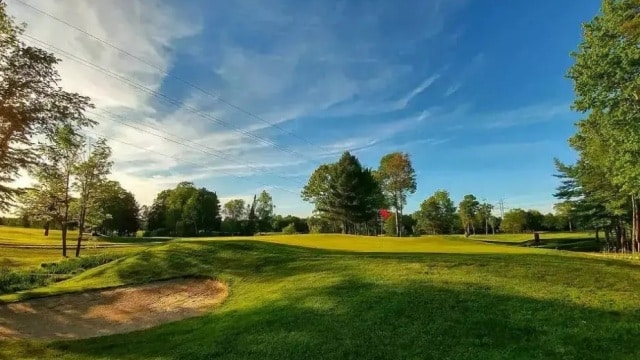
On the West Course, the short par-three second (pictured at top) proves that memorable holes don’t have to be long. Measuring 105 yards from the white tees, it demands precise distance control rather than brute force. The green is elevated and falls off sharply on three sides and the putting surface is severely sloped. The hole often produces birdies but can just as easily deliver frustration when the tiny target is missed or the approach lands on the wrong part of the green.
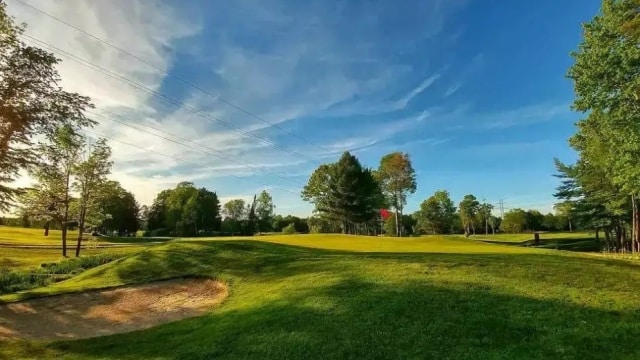
The West’s finishing hole is another favourite. Although modest in length, it rewards smart placement off the tee and requires a confident approach into a well-protected heavily contoured green where putting will be properly tested.
The South Course features three par-3s, three par-4s and three par-5s. The dogleg fourth is one of the club’s finest strategic holes. Off the tee the fairway is quite generous, but the tee shot must be carefully positioned to provide a view of the green for the approach. The green itself is raised with lots of humps and roll-off areas. Pars are rare.
The finishing hole on the South is one of my favourites. At just 400 yards from the white tees, this par-5 dogleg plays longer than the card indicates. The tee shot must thread the space between woods on the left and a gorgeous white pine standing proudly at the turn. Then it’s uphill to a sloping green guarded by large bunkers. Birdies are possible and a great way to finish your round.
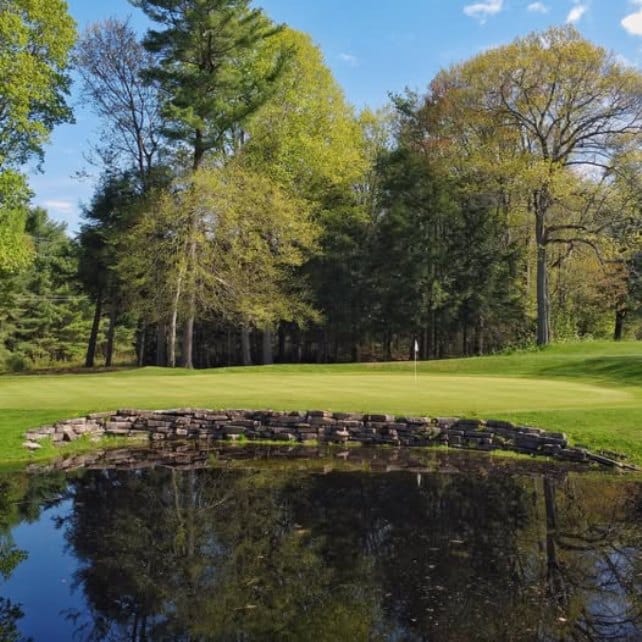
The original North Course offers its own gems, particularly the par-3 fifth. It isn’t much more than a chip shot across a pond to a long sloping green but the bucolic setting amongst the trees makes this one of Lake St. George’s most photographed holes.
Final Thoughts
Perhaps what makes Lake St. George most appealing is its accessibility. Unlike many destination courses in cottage country, it has never tried to be exclusive or intimidating. Instead, it has focused on offering enjoyable golf for every level of player. Beginners appreciate the welcoming atmosphere, while experienced golfers find enough architectural nuance to keep them thinking throughout the round. And golfers of all abilities appreciate the pristine greens which are often touted as the best anywhere.
Today, golfers can choose between the historic North nine or combine the West and South courses into an outstanding 18-hole experience. Together they showcase more than five decades of Canadian golf architecture, from Ed Leeder’s handcrafted original routing to Robbie Robinson’s strategic brilliance and Bob Moote’s modern woodland design.
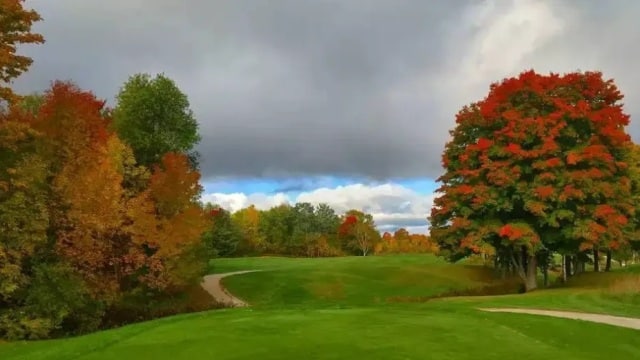
In a region known for spectacular scenery, Lake St. George offers something equally valuable: authenticity. Its history is one of perseverance, its architecture reflects the best traditions of Canadian golf design, and its three distinct nines ensure that every visit feels a little different from the last.
For golfers exploring Ontario’s cottage country, Lake St. George isn’t simply a convenient stop between Orillia and Gravenhurst—it is a course with a story worth discovering, and one that continues to reward players more than seventy years after one man’s dream first took shape in the rugged woodlands of Central Ontario.
For more information on golf at Lake St. George, click HERE.