Stop Practicing and Start Rehearsing
Have you heard the saying, “practice makes perfect?” I’m a firm believer that practice makes permanent.
That raises an important question for all of us who care deeply about this great game. As coaches and stewards of the game, are we truly helping people improve and giving them the best opportunity to succeed? Better thinking starts with better preparation.
It also starts with the environments in which we practice, play, and teach because they can definitely influence our decisions, behaviour, and performance on the golf course.
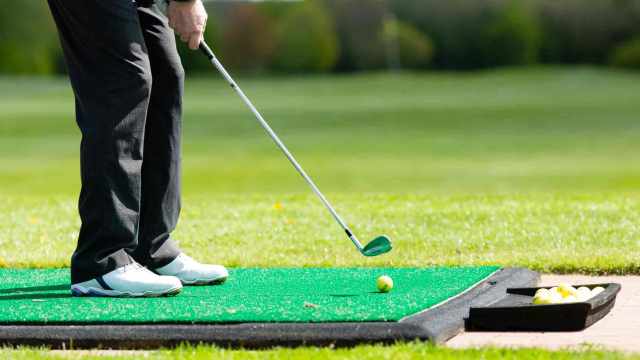
Most practice facilities, especially driving ranges, do not fully reflect the way golf is actually played. The golf course presents different lies, changing conditions, and constant decision-making. Yet many driving ranges offer perfect lies and predictable conditions.
That creates an important gap between practice and play. Plus, we don’t have “Putting Stalls” that are 5, 10, or 20 feet to practice that will solidify a reliable putting stroke and will handle all the variables or putting surfaces with good thinking. (speed, direction, path and centeredness of hit)
Many clubs, mostly private, have made significant investments in their practice facilities, which is great to see. It is worth asking whether these current environments (especially short game and the range portion) are truly helping golfers practice in ways that prepare them for real golf.
As it relates to coaching: there are the two main types of practice.
Prepare to practice or prepare to play?
There are really two ways golfers prepare. First, we prepare to play. This involves warming up the body and mind so we can play or “perform” on the course. Second, we prepare to practice. This requires purpose, structure, and intention. Understanding the difference between preparing to play and preparing to practice is awareness and the first step toward better improvement.
Blocked practice builds skills
Blocked practice is where many golfers spend most of their time. This type of practice focuses on repetition, mechanics, and skill development. It can be highly effective for improving technique and creating better movement patterns. Blocked practice has real value, especially when golfers are learning or refining a skill. It does not necessarily convert to better results. Please note: Quality practice over quantity, ALWAYS!
Random practice builds the game
Golf is a set of skills, yet still a sport and a game, not just a series of perfect golf swings. Eventually practice must reflect our play more closely. Random practice helps golfers develop adaptability and execution with different conditions and targets. This type of practice better prepares golfers for the course and scoring. Let’s make our practice more like our play by playing. I’m not sure what tour player said this, but the best practice for golf is to play golf. In its simplest form, random golf is playing only one ball per target and having the discipline to do so as if you were on the course. It’s not as easy as you’d think.
Practice helps us improve skills. Rehearsal helps prepare skills for performance and results. At some point every golfer should graduate from simply hitting balls toward preparing for real shots on the course. When your practice begins to feel more like play, it will improve the meaning of the game and your time on the course. Practice ONE shot at a time! It is a known fact that Jack Nicklaus and Ben Hogan were two of a few that rehearsed every shot they would face on the course. They were the only two guys who did the rehearsal before all of their practice shots too. The biggest challenge with just hitting balls on a driving range is that there’s “no element of consequence.”
Confidence comes from evidence
Again, for most golfers, 1/3 of the game is putting, 1/3 is short game and wedges, and the other 1/3 is full swing. We should practice accordingly with good intention, good thinking, and with good expectations in rehearsal—one shot at a time. Let’s apply that in our practice for more good evidence, better results, and lower scores.
Better results begin with better awareness. Golfers who track progress in practice for putting, short game, and ball striking will gain valuable insight into scoring and what actually needs improvement. Confidence does not come from guessing or hoping. Confidence grows from evidence. When golfers see measurable progress with results, practice becomes more productive, more enjoyable, and more meaningful—which often leads to lower scores.
As scores go down, confidence goes UP!
A drill to build confidence
Karl Morris, one of Europe’s leading Tour Performance Coaches, gets his players during a week on tour to simulate game-like conditions around the green with a game called Par 18.
Here’s how the drill works:
The Setup: You play 9 unique chip or pitch shots from 9 different locations around the green. Coaches generally categorize these into 3 easy, 3 medium, and 3 difficult shots.
The Rules: You play each shot out by chipping and then holing out your putt. You use the same ball, mark your ball on the green, and take your glove off—treating it exactly like a tournament shot.
The Scoring: Since there are 9 holes and each hole is a Par 2, your target score is 18. The goal is to track your score over time to build confidence based on concrete evidence rather than just a feeling.
Closing Thoughts
The goal is not to practice more; the goal is to practice better.
Practice with purpose. Prepare to perform.
The perfect recipe for Rehearsal is to See, Feel and Trust.
Think better, practice better, and play better.
Most importantly, enjoy the game.
Remember, good thinking leads to good decisions. And good decisions lead to lower scores. Play well, my friend!