Experience a Donald Ross classic at Windsor’s Roseland Golf Club
For golfers who appreciate classic architecture, Roseland Golf Club in Windsor offers something remarkably rare: the opportunity to play an authentic Donald Ross design without the barriers of private club membership. While many of Ross’s finest creations—such as Pinehurst No. 2 and Seminole—are among the world’s most exclusive golf courses, Roseland stands as one of Canada’s great public golf experiences and one of only a handful of Ross courses in the country.
Celebrating its centennial in 2026, Roseland has earned a reputation as one of Canada’s finest municipal golf courses. It rewards thoughtful strategy rather than brute strength and remains a shining example of architecture that has stood the test of time.
A Course Built Around a Vision
Roseland Golf Club traces its origins to the ambitious Roseland Park subdivision developed during Windsor’s rapid expansion in the 1920s. Entrepreneur Harry Neal envisioned an upscale residential community centred around a championship golf course and commissioned legendary architect Donald Ross to design it.
Ross completed the routing in 1926, and the course opened the following year. The property later became municipally owned when the City of Windsor purchased it in 1972, ensuring that one of Canada’s architectural treasures would remain accessible to the public. In 2003, the course received protection under the Ontario Heritage Act in recognition of its historical and architectural significance.
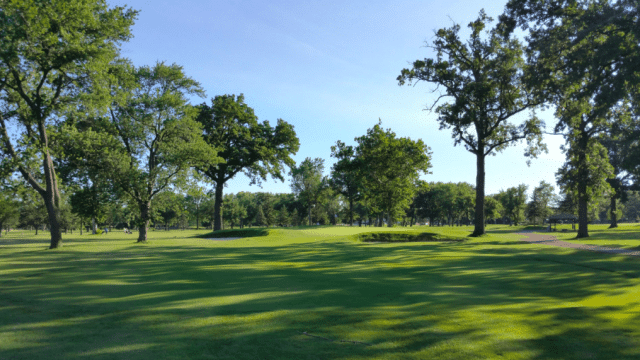
Today Roseland remains one of only about ten Donald Ross-designed courses in Canada and is believed to be the country’s only municipally owned Ross design.
Donald Ross Architecture at Its Finest
Roseland showcases many of the design principles that made Donald Ross one of golf’s greatest architects. Unlike modern layouts that often rely on forced carries and dramatic hazards, Ross emphasized strategic thinking. Golfers are constantly asked to choose between safety and aggression, with the ideal line from the tee often rewarded by a much easier approach into the green.
The course’s greatest defence lies in its putting surfaces. Ross’s trademark greens slope subtly from back to front, featuring multiple tiers, deceptive contours and tightly protected entrances. Missing the correct section of the green often leaves difficult two-putts or delicate recovery shots. Players quickly learn that being below the hole is essential.
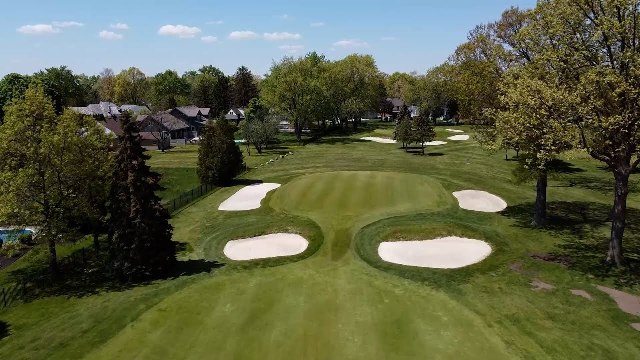
Roseland also features many of its original bunkers, with classic geometric shapes and raised faces that frame fairways and greens beautifully. Ross also utilizes a number of cross-bunkers that often force a lay-up and a subsequent longer approach. While the course measures nearly 6,950 yards from the championship tees, it remains enjoyable for golfers of all abilities thanks to multiple tee options and a layout that rewards precision more than power.
My Favourite Holes
Several holes perfectly demonstrate why Roseland remains one of Ontario’s architectural gems.
#3 is a short par-4 that bends gently from right to left. Your drive must avoid the large mature trees all down the left side. A straight drive will leave a short approach to a small undulating green protected by four deep bunkers. The green is raised and has closely mown run-off areas at every turn.
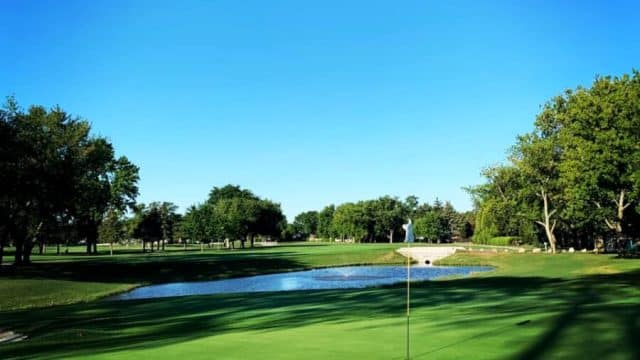
#8 is a medium length par-3 that requires a hero shot to carry a pond in front of the large sloping green. There’s water all down the right side too and any attempt to bail out left could find a deep bunker.
The par-5 12th hole is classic Ross strategy. Fairways bunkers protect the right side while trees line the left. A good straight drive leaves a decision – lay up or go for the green. Several penal bunkers dot the landscape in the lay-up area 100 yards from the green. The green itself is raised and sharply contoured in true Ross fashion and also protected by a large bunker in front. Once you get to the putting surface, your job isn’t done, as the sloping green and roll-off areas add a final challenge.
#16 starts the closing stretch. It’s a moderate length par-3 that plays to a small raised and severely sloped green. Three bunkers will catch any errant tee shots and make it tough to par the hole. There’s also a large tree on the left side of the hole that should be out of play but has been known to impede golf writer’s tee shots.
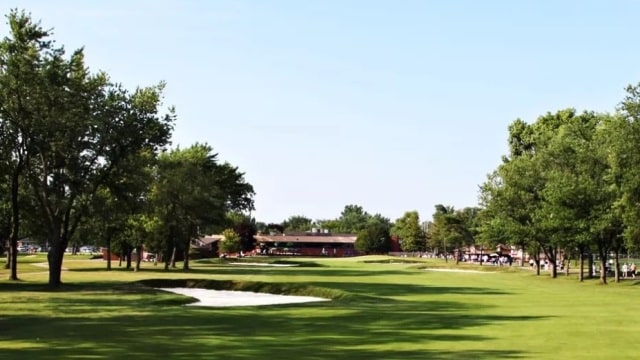
#18 (image at top) is a most memorable challenge. It’s a classic Ross closing hole that demands two excellent shots. The drive must avoid fairway bunkers before a long approach to a beautifully contoured green where even a seemingly routine par putt can become a nervous affair.
Throughout the round, no two greens look alike—a hallmark of Ross’s design philosophy and one reason repeat rounds continue to reveal new subtleties. Pay attention to the bunkers at Roseland. They’re often square or long rectangles. Cross-bunkers in particular are classic Ross designs.
More Than a Golf Course
Roseland has long served as one of Windsor’s most important public sporting facilities. The club hosts leagues, tournaments and community events while introducing thousands of new golfers to the game through junior programming. It is also home to the Essex-Kent Junior Boys Championship, Canada’s longest continuously running junior golf tournament, first played in 1928.
The facility also includes a popular nine-hole par-3 course and practice amenities, making it accessible to beginners while still providing a stern examination for accomplished players. As Roseland enters its second century, the City of Windsor is investing in new clubhouse facilities while preserving the historic Ross layout that has made the course a regional landmark for generations.
Why You Should Play Roseland
Ontario is fortunate to have many outstanding public golf courses, but few possess Roseland’s combination of history, architectural pedigree and affordability. This isn’t a course that overwhelms golfers with length. Instead, it quietly challenges every decision, every angle and every putt. Players who think strategically will score well, while those relying solely on distance often discover that Ross had already anticipated their approach nearly a century ago.
For architecture enthusiasts, Roseland represents one of Canada’s finest opportunities to experience authentic Donald Ross design. For everyday golfers, it simply offers an enjoyable, beautifully maintained round that proves timeless design never goes out of style.
Course at a Glance
Location: Windsor, Ontario
Established: 1926
Architect: Donald Ross
The Course: Municipally owned; a tree-lined parkland layout that is relatively flat and easy to walk. Canada’s only municipal Donald Ross course. There is also a 9-hole par 3 course.
Yardages: Black tees: 6,950 / Blue tees: 6,486 / White tees: 6,090 / Red tees: 5,356
Par: 72
Green Fees: $60 Walking / $80 Riding
Date Played: October 2025
For more information on Roseland Golf Club, click HERE.